


Emotional eating is a behavior in which one eats in response to feelings or emotions instead of hunger. It may also be called stress eating. Emotional eating often occurs as a way to deal with stressful situations, to suppress or soothe or manage negative emotions such as anger, fear, boredom, sadness, and loneliness.
Many major life events may lead to and can trigger negative emotions that lead to emotional eating and disrupt your weight management efforts.
In my struggles with weight loss, the emotional eating became a roller coaster of ups and downs. And it got bad after my divorce, and my weight ballooned to over 280 lbs.
Recognizing the signs of emotional eating is the first step toward breaking the cycle. Emotional eating can involve a broad spectrum, from eating when you are not hungry to seeking comfort in food after a situation you might conceive as bad.
Some common indicators that you may be engaging in emotional eating behaviors include craving specific comfort foods, eating more significant portions than usual, or eating at unusual times.
Understanding the triggers and patterns of emotional eating helps you develop healthier eating habits. It is critical to distinguish between physical and emotional hunger, implement coping strategies, and seek alternative ways to find comfort that don’t involve food. Awareness of your eating behavior gives you the upper hand in taking control of your diet and emotions.
What is Emotional Eating?
Emotional eating refers to consuming food to regulate your emotions.
Emotional eating is a tendency that occurs in response to some emotional states. Usually, emotional states such as anxiety, anger, and depression diminish the appetite; however, when they experience similar emotional states, individuals showing emotional-eating behavior may display excessive eating behaviors, like binge eating.
Emotional eating is no longer only associated with excessive eating behavior such as binge eating. Individuals who go on fad diets may also exhibit emotional eating behavior.
Understanding Emotional Eating

We often attribute our emotional eating behavior to stress.
However, it is crucial to understand that emotional eating and binge eating can develop as a self-soothing or self-regulation strategy in response to a traumatic or challenging experience.
Emotional eating is overeating as a response to some negative emotions, and for many, it has a direct correlation to weight gain and or difficulties with weight loss and maintenance. On the other hand, you have those who do engage in overeating when they seem to have “happy” emotions and thus gain weight. (2)
I have seen many people who have stated I am happy yet overeat and gain weight only to reap the adverse effects of weight gain and possible chronic disease, which then leads to feeling negative about life, which only amplifies the emotional eating behavior.
Emotional eating is like imagining you’re lost in a confusing maze. You feel hurt and alone after a fight with a close friend. You stumble upon a cozy blanket, soft and warm. Wrapping yourself in it feels comforting, but it doesn’t actually help you find your way out. You know a map exists, but for now, the blanket provides a temporary escape from the harsh reality.
Just like that warm blanket, food can provide a temporary escape from emotional pain. While this may feel comforting at the time, it won’t actually resolve the underlying issues or help you navigate difficult situations in the long term.
If you tend to turn to food when emotions run high, it’s important to pay attention to certain patterns. By doing so, you can better understand the underlying triggers and develop healthier coping mechanisms. Remember, taking control of emotional eating can have a positive impact on your physical and mental well-being.
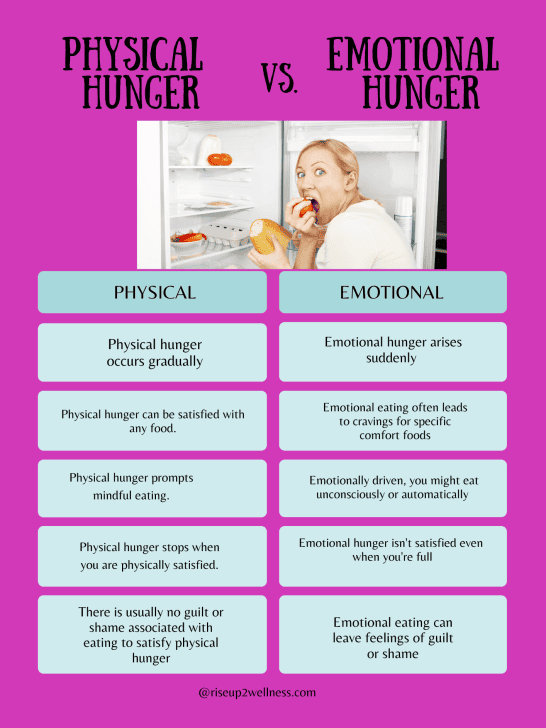
Not understanding the difference between Emotional Hunger vs. Physical Hunger:
- Onset: Emotional hunger arises suddenly, whereas physical hunger occurs gradually.
- Cravings: Emotional eating often leads to cravings for specific comfort foods, while physical hunger can be satisfied with any food.
- Awareness: When emotionally driven, you might eat unconsciously or automatically, but physical hunger prompts mindful eating.
- Satiety: Emotional hunger isn’t satisfied once you’re full, unlike physical hunger, which stops when you’re physically happy.
- Aftermath: Emotional eating can leave feelings of guilt, whereas eating to satisfy physical hunger doesn’t.
Common Triggers of Emotional Eating:
- Stress
- Boredom
- Sadness
- Happiness or Celebration
- Anxiety
- Loneliness
Recognizing Patterns:
- What you eat
- When you eat
- How much you eat
- How you’re feeling when you eat
As the Host of HerRise, I recently spoke with an Emotional Eating Specialist named Emma Murphy about emotional eating. Listen here
During the podcast, Emma explained how to help her clients identify their emotional eating patterns. This technique involves remembering the acronym HALT, which stands for Hungry, Angry, Anxious, Avoidant, Lonely or Bored, Tired, Tense, or Treat.
Using this has helped clients to recognize triggers for their eating patterns, and they can begin to break the emotional eating cycle.
Some other healthy ways to deal with your emotions, such as:
- Taking a walk
- Talking to a friend
- Practicing mindfulness or meditation
We may all experience emotional or stress at times. Eating is expected, but if it becomes a frequent coping mechanism, seeking help may be beneficial.
What Causes Emotional Eating
As a Certified Nutrition and Women’s Fitness Coach, you come across various individuals struggling with emotional eating. Whether they are self-diagnosed or diagnosed by a professional, and while there is probably not one specific cause there are some common patterns in common and somewhere in their life, they have been on or have had to endure some restrictive eating pattern.
These restrictive eating behaviors often create some stress on the body and, therefore, impact our relationship with food and our bodies.
Stress or negative emotions may undermine (disinhibit or release) self-control for you as a dieter regarding self-imposed food intake restriction.
When undereating, your body cannot distinguish self-imposed food restriction from real food shortage and acts as if in starvation mode: this causes your metabolic rate to slow down (anabolism), increasing your hunger and appetite.
Eventually, this produces an outcome where, as a dieter, you develop intense feelings of deprivation, which makes you very vulnerable to abandoning your healthy eating plan.
Particularly in times of stress, when under stress or after induction of negative emotions, dieters showed higher food intake in various experiments than non-dieters. (Obesity Journal)
Therefore, emotional/ stress eating may often drive by underlying psychological states, environmental cues, and physiological signals that you might not be immediately aware of
Psychological Triggers


Stress: High stress levels can increase cortisol production, triggering cravings for sugary or fatty foods.
- Boredom: You might eat to escape monotony, seeking emotional relief through food.
Environmental Factors: Studies have shown that the eating patterns of individuals can be influenced by dysfunctional family behaviors and childhood experiences.
Social Influence: The eating behaviors of your peers can significantly influence your own, particularly during social gatherings.
- Advertising: Studies have shown that exposure to food advertisements can increase consumption of the advertised products.
Physiological Causes
Hormonal Fluctuations: Hormones such as leptin and ghrelin regulate hunger and can be imbalanced by factors like sleep deprivation.
- Irregular Eating Patterns: Skipping meals or fasting can lead to excessive hunger, encouraging you to eat more for emotional comfort.
Consequences of Emotional Eating


Emotional eating can significantly affect your health and well-being across multiple facets of your life.
Multiple studies have shown that emotional eating increases your risk for Binge Eating and other eating disorders. Research concluded that emotional eating is more likely to lead to bingeing or overeating.
For example, in a recent study, eating due to positive and negative emotions was significantly related to binge eating, restrained eating, and preoccupation with body image and weight (Sultson, Kukk, & Ackermann, 2017).
Mental Health Implications
As the world has recently been recovering from a pandemic, it also sheds light on the mental health implications and the effect that the stress has had on people. Emotional eating is also known as stress eating, and during and after the pandemic, it escalated to become a more significant issue.
It has been suggested that the pandemic affected the development of emotional eating by three mechanisms:
- Increased weight and shape concerns negatively impact eating, exercise, and sleep patterns related to disruptions of daily routines, constraints to outdoor activities, deprivation of social support, and adaptive coping strategies.
- Increased exposure to media information provokes fear and anxiety.
- Concerns for overall high stress and adverse effects of the situation
Moreover, overeating or stress eating can exacerbate the situation and lead to further complications.
- Guilt and Shame: You may experience feelings of guilt and shame after emotional eating, which can reinforce the cycle of negative emotions.
- Aggravated Stress and Anxiety: The initial relief from eating may be followed by increased stress and anxiety, impacting your mental health.
Physical Health Impact
- Weight Gain: When you use food to cope with emotions, you may choose high-calorie, less nutritional foods that contributing to weight gain. While some who overeat and exercise may not gain as much weight, they usually consistently have a higher body mass index (BMI) compared to those who do not overeat and exercise.
- Nutritional Deficiencies: High emotions can lead to overeating processed or nutritionally deficient food, creating an imbalance in your diet. This can lead to malnutrition and negatively impact physical health. Addressing the psychological reasons behind overeating is crucial.
Social and Behavioral Effects
- Isolation: You may avoid social interactions by eating alone, which can lead to a sense of isolation.
- Eating Patterns: Emotional eating can disrupt normal eating patterns, leading to irregular mealtimes and possibly influencing your relationships with others.
Identifying Emotional Eating
Emotional eaters are more receptive to the reinforcing value of food as a coping mechanism. Therefore, eating is more likely to serve as ‘self-medication’ to provide short-term relief from stress and negative emotions. Eating palatable foods makes you feel better in the face of stress or negative emotions.
So, it is crucial to recognize when you are eating in response to emotions rather than hunger to address the emotional eating habit.
Self-Assessment Tools
You can use many tools to begin understanding the triggers and what can cause you to overeat.
- Journaling: journaling your food intake and emotional state. Note patterns over time using a table:
| Time | Food Consumed | Emotional State | Hunger Level (1-10)
|
|---|---|---|---|
Additionally, questionnaires specifically designed to detect emotional eating habits, such as the Three-Factor Emotional Questionnaire (TFEQ), should be considered.
2. Mindfulness: Slowing down and savoring your food is essential to mindful eating, the opposite of mindless, emotional eating. Try taking a few deep breaths before starting your food, putting your utensils down between bites, and focusing on the experience of eating.
Recognizing Patterns and Triggers
Observe and list common emotional triggers that prompt you to eat:
- Boredom
- Stress
- Sadness
- Tendency to eat when you’re not hungry, especially with others.
Once identified, monitor the frequency of these triggers and your corresponding eating behaviors. Pay particular attention to the times and settings when these triggers occur, and note whether food choices are impulsive or premeditated.
Strategies to Manage Emotional Eating– Coping Mechanisms


There have been times when I’ve felt overwhelmed by life’s challenges and didn’t know how to handle them on my own, from work to going through a messy divorce. It seemed like, on a daily basis, I was on edge and not myself.
Being constantly on edge and emotionally unable to enjoy life, nothing felt good.
But one thing I could always reach for, and I know many of you can relate, was food. Food became my go-to coping mechanism, whether it was a sleeve of my favorite cookies, a family-sized bag of chips, or a bottle of wine.
Yet, as time went on, I began to see the truth. Food, and my emotional eating, once considered my trusted ally, was not as comforting as it seemed. It only offered a fleeting sense of relief, leaving me feeling even more burdened in the long run.
If you can relate to this, rest assured, there are various ways to manage emotional eating effectively.
Below I discuss some ways of coping with Emotional Eating, consider implementing these specific techniques to help identify triggers and create healthier responses to stress and emotions.
Developing Healthy Coping Mechanisms
- Identify Triggers: Keep a food diary to track what you eat, when, and what emotions you feel before and after eating. Recognize patterns that indicate emotional eating.
- Find Alternatives: Replace eating with other activities that relieve stress, such as walking, reading, or hobbies.
- Support System: Build a network of friends or family who understand your goals and can offer encouragement and accountability.
Mindful Eating Practices
Mindfulness based eating practices have been shown as a effective strategy for Emotional eating and Binge eating. Incorporating these steps is a start.
- Eat Slowly: Take the time to chew your food thoroughly and savor each bite. This practice can help you recognize your body’s hunger and fullness signals.
- Distraction-Free Meals: Commit to eating your meals away from distractions like TVs, computers, or smartphones to focus on the eating experience.
- Body Check-In: Regularly pause during eating to ask yourself how the food makes you feel and to assess your hunger levels.
Cognitive Behavioral Techniques
- Challenge Negative Thoughts: Replace critical or negative thoughts with more positive, constructive ones to avoid emotional eating.
- Stress Management: Use relaxation techniques such as deep breathing, meditation, or yoga to manage stress without turning to food.
- Goal Setting: Set attainable goals and track your progress to build confidence and create momentum in changing your eating habits.
Tools like the 3 F’s
- Feel: This sign could be a thought bubble with a question mark inside, or the person holding a mirror to their face to symbolize self-reflection.
- Feed: This sign could depict a scale with healthy and unhealthy foods on each side, or a person looking at a menu with healthy options highlighted.
- Find: This sign could show various activities, such as someone taking a walk, doing yoga, taking a bath, or talking on the phone.
A similar version I have developed and used in the past and continue to use to this day.
- Stop and Pause– Ask yourself a question like ‘What am I feeling? Am I hungry?
- Question– Do I want to eat or cover a feeling or emotion?
- Decide– Decide out of love, not guilt or shame.
Over the years, by using some of these techniques and I have developed and better relationship with food and have become better at recognizing healthier coping, and as I eat healthier, my body doesn’t react well to junk food.
When To Seek Professional Help


It can be a daunting task to navigate emotional eating and also challenging, but you’re not alone; there are many resources and Professional help available to support you in developing healthier coping strategies.
When to Seek Professional Help
You should consider seeking professional help if emotional eating is interfering with your day-to-day life or your attempts at managing it on your own have been unsuccessful. Warning signs may include:
- Eating in response to emotions rather than hunger regularly.
- Feeling guilt or shame about your eating habits.
- A noticeable impact on your physical health.
- Persistent negative self-talk linked to eating or body image.
Types of Professional Support
Here are specific types of professional support that may assist you in addressing emotional eating:
- Counselors or Therapists: Trained in dealing with emotional issues underlying eating behaviors.
- Look for professionals specializing in eating disorders or cognitive behavioral therapy (CBT).
- Registered Dietitians (RD) or Nutritionists: Experts in nutrition like myself who can help create personalized eating plans.
- Seek those with experience in behavioral change and emotional eating.
- Support Groups: Connect you with peers facing similar challenges.
- These groups may be in-person or online, facilitated by a professional.
- Mindfulness and Stress-Reduction Programs: Can improve your emotional regulation and relationship with food. Programs like Mindfulness-Based Stress Reduction (MBSR) may be beneficial.
- Medical Professionals: Include physicians or psychiatrists who can address any medical issues related to eating habits and prescribe medication if necessary.
Identify the type of support most aligned with your needs and take that first step towards healthier coping mechanisms.
Eating Disorder Hotlines for 24/7 Crisis Help 1-888-375-7767
Eating disorder hotlines are dedicated helplines offering assistance, information, and support for individuals dealing with eating disorders. Staffed by trained professionals, they provide a safe space to discuss struggles, seek guidance, and receive referrals for treatment options and emotional support.
Building Resistance and Prevention of Emotional Eating Strategies
To effectively prevent emotional eating, you should build a solid education foundation and implement early intervention strategies to help you recognize and manage triggers.
Lifestyle Changes
You can enhance your emotional resilience by adopting healthy habits that align with your well-being goals.
- Dietary Habits: Focus on balanced meals with plenty of fruits, vegetables, whole grains, lean protein, and healthy fats. Keeping a food diary can help you remain aware of your eating patterns and identify triggers for emotional eating.
- Physical Activity: Regular exercise can improve your mood and reduce stress. Aim for at least 150 minutes of moderate aerobic activity or 75 minutes of vigorous aerobic activity per week, plus strength training exercises at least twice a week.
- Sleep Hygiene: Strive for 7-9 hours of quality sleep per night. Establish a consistent sleep schedule by going to bed and waking up simultaneously each day.
- Stress Management: Techniques such as deep breathing, meditation, yoga, or tai chi can help manage stress levels, making you less likely to turn to food for emotional comfort.
Education and Awareness
Knowledge is power: Understand that emotional eating is often a response to stress, anxiety, or other intense emotions. By recognizing the difference between physical and emotional hunger, you can identify patterns in your behavior. Physical hunger develops gradually and can be satisfied with any food, while emotional hunger is sudden and craves specific comfort foods.
- Learn to identify your triggers: Keep a food diary, noting what you eat and how you feel when eating. Look for patterns that connect certain emotions with specific eating behaviors.
- Understand the consequences: Educate yourself about the potential health risks of emotional eating, which can include weight gain, poor nutrition, and exacerbated emotional distress.
Early Intervention Strategies
Create healthy responses: When you feel the urge to eat due to emotions, develop a toolbox of alternatives.
- Instead of reaching for food:
- Take a walk or engage in some physical activity.
- Practice deep-breathing exercises or meditation.
- Build a supportive network: Surround yourself with friends, family, or a support group that understands your goals and can encourage when facing emotional eating urges.
- Seek professional help if needed: If you find it particularly challenging to manage your emotional eating independently, consider consulting with a therapist or dietitian specializing in emotional eating issues.
Support Systems and Community
A robust support system is crucial for lasting resilience. Engaging with a community provides you with emotional support and accountability.
- Professional Support: Consider working with a therapist, counselor, or registered dietitian specializing in emotional eating. They can offer personalized strategies and coping mechanisms.
- Peer Support: Joining support groups or online communities can connect you with others facing similar challenges. Sharing experiences and tips can be encouraging and validating.
- Family and Friends: Communicate your goals and needs with close ones. They can offer encouragement, help you with meal planning, or join you in exercise, creating a joint effort to maintain resilience against emotional eating.
Frequently Asked Questions


Navigating the complexities of emotional eating begins with understanding your patterns and identifying strategies to cope. Here are specific answers to help guide you through common inquiries.
Disclaimer:
- This article contains information for general information purposes only. The author assumes no responsibility for errors or omissions in its contents.
- The author makes no representations as to the accuracy, completeness, or suitability of the information contained in this article.
- In no event shall the author be liable for any special, direct, indirect, consequential, or incidental damages or any damages whatsoever, whether in an action of contract, negligence, or other tort, arising out of or in connection with the use of the article or its contents.
- The author reserves the right to make additions, deletions, or modifications to the article’s contents without prior notice.